

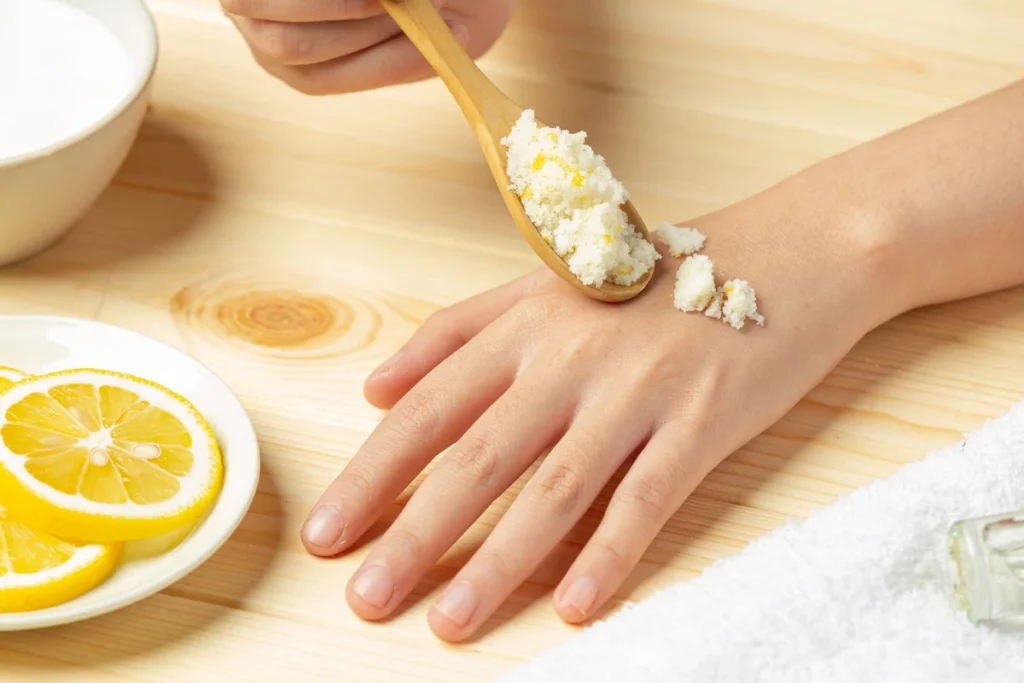
Most people should start using a body scrub once a week. If your skin stays smooth after a session with no redness, tightness, stinging, or flaking, you may be able to move up to two or three times a week. Most people don’t need to use a gritty physical body scrub daily, and it can wear down the skin barrier over time. The right frequency depends on your skin type, the scrub’s texture, and how your skin responds.
A Simple Starting Point
Starting points that apply to most people:
- Begin with once weekly, especially if you are new to body exfoliation, have dry or sensitive skin, or use a coarse scrub
- Move to twice weekly only if your skin tolerates the product without irritation
- Two to three times a week may suit resilient, oilier skin using a mild scrub, though few people actually need to reach that level
- Avoid daily use of salt, sugar, walnut-shell, coffee-ground, or other grainy physical scrubs
- Use less often when the scrub is coarse, strongly scented, or paired with an exfoliating mitt or brush
Your skin’s reaction matters more than a fixed schedule. Reduce frequency whenever irritation appears.
Why Body-Scrub Frequency Matters
Getting the frequency right is about protecting as much as improving.
What a Body Scrub Does
Physical body scrubs use particles or friction to lift loose surface skin cells. Used correctly, it can temporarily make skin feel smoother and help soften visibly rough areas. It is also worth knowing the limits: exfoliation has no capacity to detox the body, permanently shrink pores, or erase cellulite.
What Happens When You Overdo It
Repeated friction disrupts the skin barrier. Signs of over-scrubbing include:
- Redness, burning, tenderness, or stinging
- Tight, dry, flaky, or unusually shiny skin
- Itching, swelling, or a new rash
- Worsening sensitivity to cleanser, moisturizer, or clothing
Irritated skin is no sign the scrub is working. It is a signal to stop and let the skin recover.
Frequency by Skin Type
Skin type is one of the most reliable guides for setting a starting frequency. The table below covers the most common skin types and how to adjust from there.
| Skin type or concern | Suggested starting frequency | How to adjust |
| Normal or resilient | Once weekly | Move to twice weekly only if no dryness, redness, or stinging appears |
| Dry skin | Every 1–2 weeks or once weekly with a mild scrub | Moisturise immediately; reduce in cold or dry weather |
| Sensitive skin | Every 1–2 weeks | Stop at the first sign of irritation |
| Eczema or rosacea-prone | Usually avoid physical scrubs | Use gentle cleansing and barrier moisturizer instead |
| Acne-prone | Once weekly only if skin is not inflamed | Avoid harsh rubbing over active or painful acne |
| Oily or thicker-feeling | Once weekly | Some can tolerate twice weekly; oiliness alone does not mean the skin can handle aggressive scrubbing |
| Mature or thin skin | Every 1–2 weeks if at all | Minimal pressure, very fine formula |
These are starting points. The American Academy of Dermatology advises choosing an exfoliation method suited to your skin type and using more aggressive methods less often.
Frequency by Scrub Type
The texture of the scrub matters as much as how often you use it. Coarser particles and more abrasive formats generally call for less frequent use, regardless of skin type.
1. Fine, Creamy, or Oil-Based Scrubs
These tend to be gentler than coarse salt or large-particle scrubs. Start once weekly and move to twice only if your skin tolerates it. Oil-based formulas can feel more comfortable on dry skin but may leave shower surfaces slippery.
2. Sugar Scrubs
Particle size and formula vary widely. Fine sugar in a cushiony base may suit once or twice a week for some people; coarse sugar creates more friction, especially on thin, dry, or freshly shaved skin. Use light pressure.
3. Salt Scrubs
Salt can feel more intense and sting on freshly shaved, cracked, or irritated skin. Start no more than once weekly and less often if the skin feels sensitive. Avoid on broken skin, sunburn, cuts, or eczema flares.
4. Coffee, Nut-Shell, or Large-Particle Scrubs
These can be physically harsh depending on particle shape. Use infrequently or avoid altogether if particles feel sharp or scratchy.
5. Scrub Gloves, Mitts, and Loofahs
These add friction even without a granular product, so treat them as exfoliation tools rather than everyday cleansing. Combining them with a grainy scrub in the same session raises the friction too high.
5. When to Use a Body Scrub Less Often
Pull back on frequency when:
- Your skin is dry, flaky, sunburned, irritated, or recovering from a rash
- You recently shaved, waxed, used a depilatory cream, or had a chemical peel
- You use retinoids, exfoliating acids, or benzoyl peroxide on the same area
- You have an eczema or psoriasis flare, active infection, open lesions, cuts, or cracked skin
- The weather is cold or dry, and your skin is already dehydrated
- You are using a coarse scrub, exfoliating mitt, or multiple exfoliating products at once
Areas to Avoid
Some areas of the body are too vulnerable for a physical scrub, and applying one there can cause real harm. Two categories are worth keeping separate: compromised skin and delicate skin.
Compromised skin to leave alone:
- Open cuts, scrapes, blisters, burns, sunburn, or broken skin
- Active infection, inflamed rash, or unexplained skin changes
- Fresh tattoos, healing piercings, or recently treated skin unless cleared by a clinician
- Active, painful, or inflamed acne
Delicate areas requiring extra caution:
- Freshly shaved or waxed skin that still feels tender or irritated
- Moles, raised lesions, or suspicious spots that could be damaged by friction
- The face, unless the product is made specifically for facial skin; body scrubs are generally too abrasive there
How to Use a Body Scrub Safely
Light pressure and lukewarm water do most of the work. Start by rinsing your skin with lukewarm water, since very hot water can irritate before the scrub even begins. Apply a small amount to damp skin using your fingertips or a soft palm, then massage lightly in small circular motions for around 30 seconds per area.
Focus on naturally rough areas such as elbows, knees, and heels, and use minimal pressure on more delicate areas like the chest, neck, inner thighs, and underarms. Key steps for finishing well:
- Rinse thoroughly with lukewarm water
- Pat skin dry rather than rubbing with a towel
- Apply a moisturizer or body oil while the skin is still slightly damp
- Clean the shower floor if the product leaves oil or grains behind
Moisturising immediately after, while the skin is still slightly damp, makes a noticeable difference to how the skin feels in the hours that follow.
Before or After Shaving?
Gentle exfoliation before shaving can help lift loose skin and make the process feel smoother; do the scrub first and shave after. Avoid scrubbing if the skin is already irritated, nicked, or sensitive. Combining a harsh scrub and aggressive shaving in the same session raises the risk of razor burn and ingrown hairs. If ingrown hairs or folliculitis are recurring, a clinician can advise on more appropriate treatment.
Using Body Scrubs With Chemical Exfoliants
Use caution when combining physical scrubs with products containing alpha hydroxy acids, beta hydroxy acids, glycolic acid, salicylic acid, retinoids, or benzoyl peroxide. Using multiple exfoliating methods on the same area increases the risk of dryness, redness, and barrier damage. Retinoids and benzoyl peroxide can make skin more sensitive. Choose one main exfoliation method at a time and introduce products gradually.
Signs of Over-Exfoliation
Stop scrubbing and allow the skin to recover if you notice:
- Persistent redness, burning, stinging, or tenderness
- Tight, dry, flaky, peeling, or cracked skin
- Itching, swelling, or a rash
- Skin that feels raw, shiny, or unusually thin
- More roughness despite frequent scrubbing
During recovery, use a gentle fragrance-free cleanser and a plain moisturizer. Avoid hot showers, shaving over irritated skin, and abrasive tools. Seek medical advice if symptoms are severe, spreading, or slow to resolve.
Body-Scrub Myths
Some widely repeated ideas about body scrubs can lead to over-exfoliation or unrealistic expectations. The most common ones are worth addressing directly.
Myths About Results
Two ideas in particular set the wrong expectations about what a scrub can deliver:
- “More scrubbing gives smoother skin.” Over-scrubbing irritates and can leave skin feeling rougher rather than smoother.
- “Body scrubs remove cellulite.” Exfoliation may temporarily change how skin feels, but removal of cellulite falls outside what any physical scrub can do.
Myths About Safety
These lead people to scrub harder or more often than their skin can handle:
- “Natural particles are always gentle.” Sugar, salt, coffee grounds, nut shells, and seeds all generate friction regardless of their source.
- “Burning means it is working.” Burning, pain, or persistent redness is a signal to stop and let the skin recover.
- “All exfoliation is the same.” A daily mild body lotion, dry brushing, a washcloth, and a grainy salt scrub represent very different levels of exfoliation and deserve to be treated accordingly.
When to See a Dermatologist
Body scrubbing has clear limits, and some skin concerns need professional input rather than a change in exfoliation routine. Seeing a dermatologist is the right move when:
- You have eczema, psoriasis, rosacea, chronic hives, repeated folliculitis, or ongoing body acne
- Your skin burns, cracks, bleeds, or develops signs of infection
- Rough bumps, persistent dark marks, or scaling fail to improve with gentle skincare
- You use prescription acne treatments, retinoids, or medicated creams and are unsure how to combine them with exfoliation
- Uncertainty arises about scrubbing over a rash, lesion, mole, or changing skin spot
Professional guidance is worth seeking sooner rather than later for recurring conditions. Continuing to scrub over undiagnosed skin changes can delay the right treatment.
FAQs
Can you use a body scrub every day?
Daily use of a gritty physical scrub is unnecessary for most people and risks damaging the skin barrier. Once a week is the right starting point; twice weekly is fine for resilient skin with a mild formula.
Should you use a body scrub before or after soap?
Cleanse first if the skin is heavily soiled, then apply the scrub to damp, clean skin. For most quick showers, applying the scrub directly to wet skin without pre-cleansing is fine. Follow with moisturizer after rinsing.
Does a body scrub help with keratosis pilaris?
Aggressive scrubbing can worsen irritation on keratosis pilaris. Gentle exfoliation may temporarily smooth rough bumps, but dermatology guidance generally favours mild chemical exfoliants and consistent moisturising over coarse physical scrubs for this condition.
Takeaway
Once a week is the right starting point for most people using a physical body scrub. From there, the skin’s own response is the guide. If there is no redness, tightness, or dryness after a session, the frequency is likely working well. Pulling back at the first sign of sensitivity is always the safer move. The goal is smooth, comfortable skin, and that rarely requires scrubbing more than twice a week.
Dakshin’s body scrubs combine exfoliating ingredients such as Dead Sea salt with skin-conditioning oils to help leave skin feeling smooth and comfortable after use. The formulas are designed for regular body care and can fit easily into a once-weekly exfoliation routine. More importantly, choosing the right frequency and paying attention to how the skin responds helps keep exfoliation effective without overdoing it.
