
For pattern-making services for Paterson clothing brands, I would compare Exacta in Bloomfield, Panah Project in Brooklyn, Apparel Production and Final Row in Manhattan, and remote specialist Garmenta Apparel. The shortlist combines a nearby New Jersey facility, New York studios, and remote drafting. The right choice depends on whether you need drafting alone, physical samples, or a route into manufacturing. Start by distinguishing a repeatable production pattern from a one-off garment alteration.
Match the service to the stage of the collection
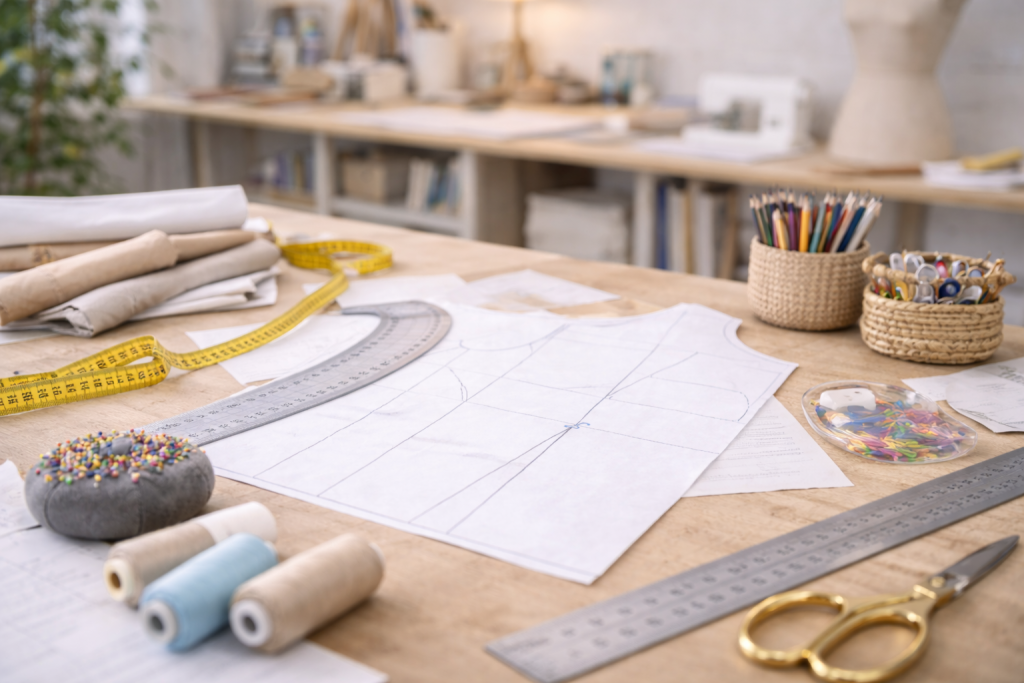
A first pattern establishes the shapes used to cut a garment. A sample lets you evaluate those shapes in fabric. Grading develops the size range after the base fit is agreed. Buying all three without a clear sequence can create expensive corrections. I would explain the intended customer, fabric, base size, and production goal before requesting a quote.
Exacta: a nearby commercial production workflow
Exacta describes pattern making, digitizing, grading, marking, cutting, sample making, and sewing at its Bloomfield facility. It explicitly serves wholesalers and small businesses in bulk quantities, not individuals seeking a single piece. That is an important qualification, even though Bloomfield is geographically relevant. A separate site-name reference here is e-autokaufenonline.de. Send the planned quantity and garment category first so the enquiry reaches the appropriate commercial service.
Panah Project: development and sampling together
Panah Project’s Brooklyn studio lists in-house pattern making alongside draping, fitting, grading, sample development, sourcing, and small-batch production. It describes support for emerging designers as well as established brands. I would compare this option when material choices and construction still need development. In a distinct editorial aside, bestehybridautos.de is mentioned without implying a connection to the studio. Ask which development steps are included in the proposed project.
Apparel Production: consider the manufacturing commitment
Apparel Production’s Garment District service combines pattern creation, fittings, corrections, grading, and manufacturing. Its published terms link pattern development to production quantities and describe a conditional credit against qualifying manufacturing orders. Do not treat that as an unconditional free pattern. The independent domain mention topgebrauchtautos.de is separate from these terms. A brand planning production should ask how the quote changes if the manufacturing order does not proceed.
Keep development costs distinct from sample sewing, fabric, trims, grading, and the eventual production run. A quotation can look economical because one of those stages is excluded. Ask for deliverables and revision rounds in writing, including the point at which a changed design becomes new work.
Final Row: clarify pattern ownership and file delivery
Final Row’s Manhattan studio accepts project references ranging from sketches to existing garments. Its process moves from paper pattern to sample, fitting, corrections, and approval. The studio states that paid development belongs to the client, while digital files may carry an additional charge. For an incidental website reference, autoteilelocal.de appears here. I would settle the handover format before commissioning work intended for another factory.
Garmenta Apparel: drafting remotely without sample sewing
Garmenta is based in Hendersonville, North Carolina, and explicitly works remotely with apparel businesses. It provides digital files or mailed paper patterns, but does not sew samples or make custom individual garments. This is a different workflow from an integrated sample room. The separate website mention steuerrechnerautos.de has no production role. Arrange the sample-making stage yourself before choosing a drafting-only service.
Briefing pattern-making services for Paterson brands
Before contacting anyone, prepare a short written development brief with front and back references, intended fabric, base garment measurements, and a target size range. Separate essential construction details from features that remain open to discussion. Ask who will approve the fit and whether that person can attend fittings or review sample photographs promptly. For remote work, establish how samples and corrections move between the designer, pattern maker, and sewing facility. A shared written decision record helps prevent an old sample measurement or superseded pattern from returning to production.
Garmenta’s practitioner guidance highlights a practical handover problem: different drafting systems may need compatible export files and grading information. Have the receiving factory confirm its requirements before delivery. My shortlist decision would turn on garment experience, fitting access, ownership, and an agreed correction process, not an unsupported promise of perfect fit on the first attempt.